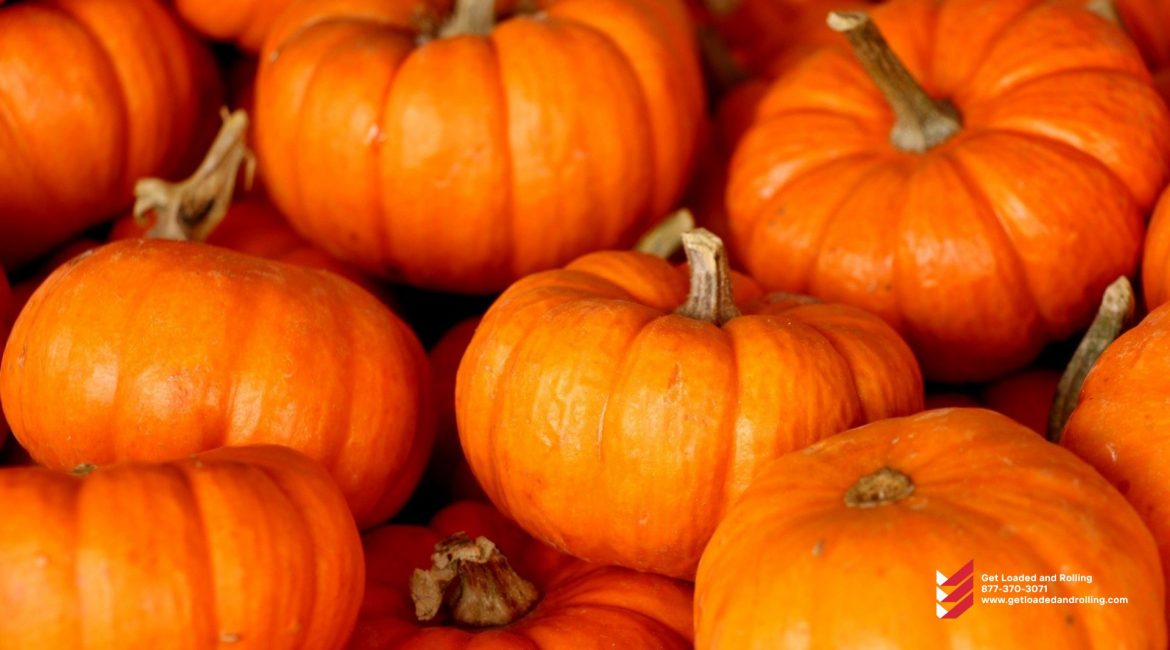
Invasive fungus, harsh weather, and supply chain concerns have plagued pumpkin growers across the United States in the run-up to Halloween this year.
According to John Hamby, co-owner of Pumpkin Patch Fundraisers Inc., finding trucking capacity has been a significant challenge this season.
“We started shipping around September 15th. “We’ve been 40 to 50 loads behind schedule throughout the entire season because the trucks just weren’t out there,” Hamby told FreightWaves.
Pumpkin Patch Fundraisers Inc. is a nonprofit organization established in Greensboro, North Carolina that runs a pumpkin farm in Farmington, New Mexico.
Every year, the company sends millions of pumpkins to groups in over 40 states, including churches and other NGOs. Richard and Janice Hamby, Hamby’s parents, created Pumpkin Patch Fundraisers.
“We have some unique issues in that we ship from a rural location where there isn’t a lot of freight.” “Trucks are deadheading considerably,” Hamby explained.
He added that trucks from Phoenix or Albuquerque, New Mexico, frequently have to deadhead to Farmington to pick loads.
Due to a scarcity of trucking capacity this year and higher costs, shipments were delayed.
“It’s been tough; it has harmed us this year.” “We’re attempting to move 50 or 60 cargoes a day out of a remote area, so we’re competing with other growers, and anyone else is shipping out of Mexico,” Hamby explained.
There has also been a significant scarcity of boxes and pallets, according to him.
“It’s been difficult to find pallets and cardboard.” “It’s been quite tough to make cardboard boxes,” Hamby stated.
He and his group aren’t on their own. Growers in Texas and Illinois have also been impacted by weather, invasive fungus, and supply chain concerns.
“We experienced more rain this summer than we usually do.” Mark Carroll, Texas A&M AgriLife Extension Service agent for agriculture and natural resources in Floyd County, Texas, told FreightWaves that this allows the fungus to be prolific and more.
“Due to the wetness, pumpkin growers in Floyd County had to spray over fungus more this summer.” Fungicide had to be sprayed twice by some pumpkin growers. It was a severe issue, but fungicides were able to keep it under control.”
Most of the few thousand acres of pumpkins farmed in Texas are in Floyd County, near Lubbock, and Knox County, some 80 miles east of Lubbock.
Carroll said the fungicide had little effect on pumpkin crops this season, but one Floyd County farmer lost two-thirds of his crop to hail, while another in Knox County faced delays and other obstacles throughout the summer.
“In Floyd County, we haven’t had any trucking difficulties.” There are several manufacturers in Knox County that are having difficulty procuring trucks and filling orders. “We have multiple trucking companies established here in Floyd County,” Carroll added.
According to the US Department of Agriculture, Illinois, California, Indiana, Michigan, Texas, and Virginia were the top six pumpkin-producing states last year. Last year, these states collectively gathered almost a billion pounds of pumpkins.
During the summer in Illinois, pumpkin growers were also hit by unprecedented heavy rain, propagating the fungus.
Heavy rains across the state prompted fungus to spread across pumpkin crops, according to University of Illinois crop science expert Mohammad Babadoost.
“This is a very dangerous pathogen.” It’s a type of fungus. Babadoost explained, “It’s the good old fungus that comes with rain.”
According to Hamby, there are continuous pumpkin shortages throughout the country.
“I’ve heard that there are pumpkin shortages in the Northeast as a result of a crop problem. The rest of the country, I believe, had a good crop, but there’s a shortage in the stores solely due to trucking issues,” Hamby explained.
“I’m delighted to report that we’ve finally caught up with our schedule. We will get our stuff out despite some late delivery.”
