📞 Tired of calling five people just to get one quote? Not sure if rail is even the right move for your freight? If you’re exploring options to move heavy cargo without overpaying or overcomplicating things — this guide about rail freight shipping is for you.

🚆 What is Rail Freight Shipping?
Rail freight shipping is the movement of goods via trains across regional or national rail networks. It’s a cost-effective and reliable solution for transporting heavy, bulk, or long-haul freight overland, especially when combined with trucking (known as intermodal shipping).
🔄 Intermodal Explained: Rail + Truck = Smarter Shipping
Intermodal shipping uses both rail and truck to move freight efficiently. Typically, freight is loaded into containers or trailers that can be transferred between rail and trucks without unloading the goods themselves. This approach reduces handling, improves fuel efficiency, and often shortens delivery times.
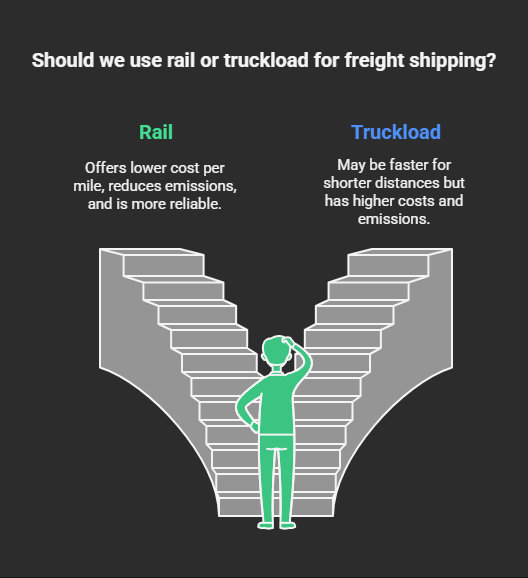
📉 How Rail Compares to Truckload (Cost, Emissions, Delays)
- 💰 Cost: Rail offers lower cost per mile than truckload, especially for long distances or heavy freight.
- 🌎 Emissions: Rail reduces carbon emissions by up to 75% compared to trucking.
- ⏱ Reliability: Rail is less affected by driver shortages, road congestion, and fuel volatility.
📦 What Types of Freight Work Best for Rail?
Rail is ideal for:
- 🚛 Bulk freight (grain, steel, chemicals, aggregates)
- 📦 Palletized goods
- 🚢 Intermodal containers (domestic or international)
- 📈 High-volume or recurring shipments
- ☣️ Hazmat or specialized freight

🗺️ Class 1 Rail Network Access (UP, CSX, CN, etc.)
Shipping by rail becomes much more powerful when you’re connected to major Class 1 railroads like Union Pacific (UP), CSX, Canadian National (CN), Norfolk Southern (NS), and BNSF. These carriers form the backbone of North America’s rail infrastructure.

🤝 How Brokers Help You Navigate Rail Shipping
Freight brokers simplify access to rail by:
- ⚡ Providing fast, accurate quotes
- 🚚 Coordinating drayage (first and last mile trucking)
- 📅 Handling scheduling, transloading, and compliance
- 📞 Giving you a single point of contact for multi-mode logistics
🛠️ When You Should Use Drayage or Transloading
- 🚛 Drayage: Needed for short-haul trucking between rail ramps, ports, and warehouses.
- 🔄 Transloading: Transfers freight from one mode to another (e.g., container to flatbed).
These services help complete the rail journey and allow you to ship to places rail alone can’t reach.

🧾 How to Get a Fast, Accurate Rail Quote
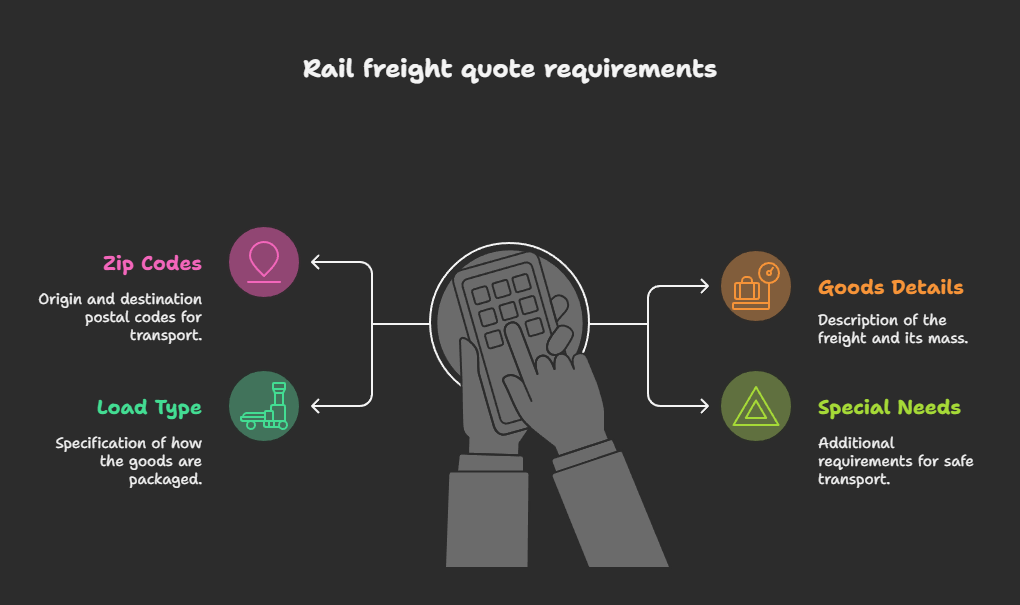
To get a rail freight quote, you’ll typically need:
- 📍 Pickup and delivery zip codes
- 📦 Commodity type and weight
- 🚛 Load type (pallets, bulk, containers)
- ⚠️ Special handling or equipment needs (e.g., hazmat, lift gate)
Some brokers, like Get Loaded and Rolling, offer submitting quotes in under 5 minutes with no contracts required.
📋 What to Expect When Working With a Freight Broker
- 🧑💼 Fast responses from real humans
- 💵 Customized pricing
- 📢 Transparent communication and updates
- 🔗 End-to-end coordination: drayage, rail, warehousing, compliance
🚀 Ready to Ship by Rail?
Rail freight is efficient, scalable, and environmentally friendly. Whether you’re moving bulk, containers, or palletized cargo, working with an experienced freight broker can make the entire process seamless.
⚡ Need a rail quote fast?
Click here to get your rail freight quote submitted in under 5 minutes
No contracts. No delays. Just real rates and real support.
