FedEx Corp. announced Wednesday that it has initiated a long-awaited initiative to integrate all of its operations, signaling the end of the operationally siloed business model that defined FedEx’s first 50 years.
The Network 2.0 strategy will cost around $2 billion to implement over the next five years, according to corporate executives at its Memphis, Tennessee, headquarters. If everything goes as planned, it will bring $2 billion to FedEx’s (NYSE: FDX) annually operating profits beginning in fiscal 2025.
The announcement on Wednesday formalizes a method that was already in the works, albeit in a limited capacity. FedEx released a “last-mile optimization” tool in early 2020, allowing shipments to be routed to the operational unit best suited to deliver them. FedEx Express, the company’s air and international branch, has shared three FedEx Ground sites in the United States with FedEx Ground. FedEx Express tenders 1.3 million items per week to FedEx Ground, the majority of which are end-of-next-day or second-day deliveries. This relationship will grow as FedEx Express sees more opportunities to offload items to FedEx Ground, which has lower operational costs due in part to the employment of independent driver contractors rather than corporate employees.
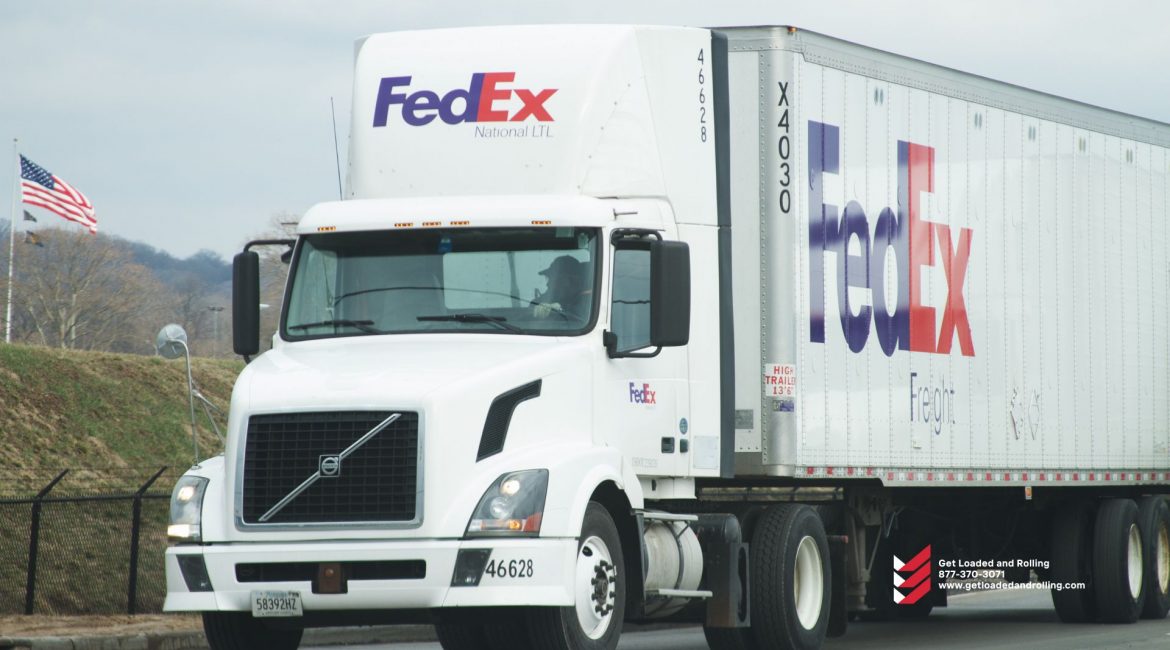
FedEx Freight, the company’s less-than-truckload division, and FedEx Ground have begun to merge their huge line-haul operations, which ran 3.7 billion miles in the company’s most recent fiscal year, which ended May 31, in an effort to minimize idle miles and enhance equipment utilization. According to corporate executives, increased usage of rail intermodal networks has reduced so-called bobtail miles — distance driven by a tractor without a trailer — by around 8 million miles.
FedEx said the move will allow it to operate 100 fewer US stations over the next five years while increasing volumes. It also predicted a 10% decline in pickup and delivery routes in the United States over that time period. According to executives, business units will function from a single station in areas with low package density.
The initiative will go beyond the borders of the United States. FedEx will increase its use of passenger lift and rely more heavily on its FedEx Logistics business to perform freight forwarding functions to procure capacity outside of the FedEx global air network as more below-deck or bellyhold aircraft capacity that was shut down during the pandemic reenters the international air shipping market.
CapEx reductions
FedEx said greater efficiency from the program, combined with the company’s soon-to-be-completed air fleet modernization, will help cut yearly expenditures to 6.5 percent or less of annual sales by its 2025 fiscal year, which begins June 1, 2024. In comparison, its yearly capex-to-revenue ratio has varied between 7% and 8% in recent years. Executives promised that after years and billions of dollars spent to expand its networks — most notably at FedEx Ground to accommodate projected surges in e-commerce demand — the company would begin to “sweat the assets,” business jargon for squeezing more productivity out of the resources it already has.
The company expects annual adjusted operating income to raise between $3 billion and $4.5 billion by fiscal 2025. By that time, adjusted operating margins for FedEx Ground will be 11 percent to 12 percent, 8 percent to 9 percent for FedEx Express, and 20 percent to 22 percent for FedEx Freight.
FedEx anticipates 4% to 6% compound annual revenue growth through fiscal 2025, with volume increases accounting for one-third of the increase and price measures accounting for the remainder. According to executives, the revenue prediction is relatively cautious.
Executives at the company acknowledged the complexity of such a big operational transformation and committed to proceed cautiously in order to minimize service disruptions and avoid unanticipated costs. “We have to get this right,” said FedEx President and CEO Raj Subramaniam.
Subramaniam, a staunch supporter of the merger agenda, took over as CEO on June 1. He succeeded FedEx founder and chairman Frederick W. Smith. Smith created the original model and, just a few years ago, openly stated his support for it.
FedEx created its business on the premise that divisions that ran independently might develop distinctive skills and respond more effectively to the needs of consumers who used specific services. Few would dispute the argument, given the company’s amazing growth trajectory over the majority of its history.
However, it became clear in recent years that the strategy had outlived its usefulness. Operations had grown inefficient, and there were far too many internal seams to navigate. “We constructed systems and procedures that don’t talk to one other,” said Richard W. Smith, FedEx Express’s president, CEO-elect, and the founder’s son. Smith had also lobbied hard for the adjustment announced on Wednesday.
Satish Jindel, CEO of ShipMatrix, who has been pounding the table on the integration approach for years, said he was happy with the news and the company’s pledges that it will move promptly but cautiously to execute. In a phone conversation Wednesday, Jindel, who has worked for FedEx for roughly 25 years, described the program as “ambitious but yet extremely realistic.”
FedEx Ground, which has fallen short of operating margin predictions in recent years despite significant volume growth, may profit the most from the new integration, according to Jindel. “I expect [Ground] margins to outperform estimates by two or three full percentage points, and that it will meet its targets well before 2025,” he said.
FedEx shares fell more than 2.6 percent on the New York Stock Exchange on Wednesday.
