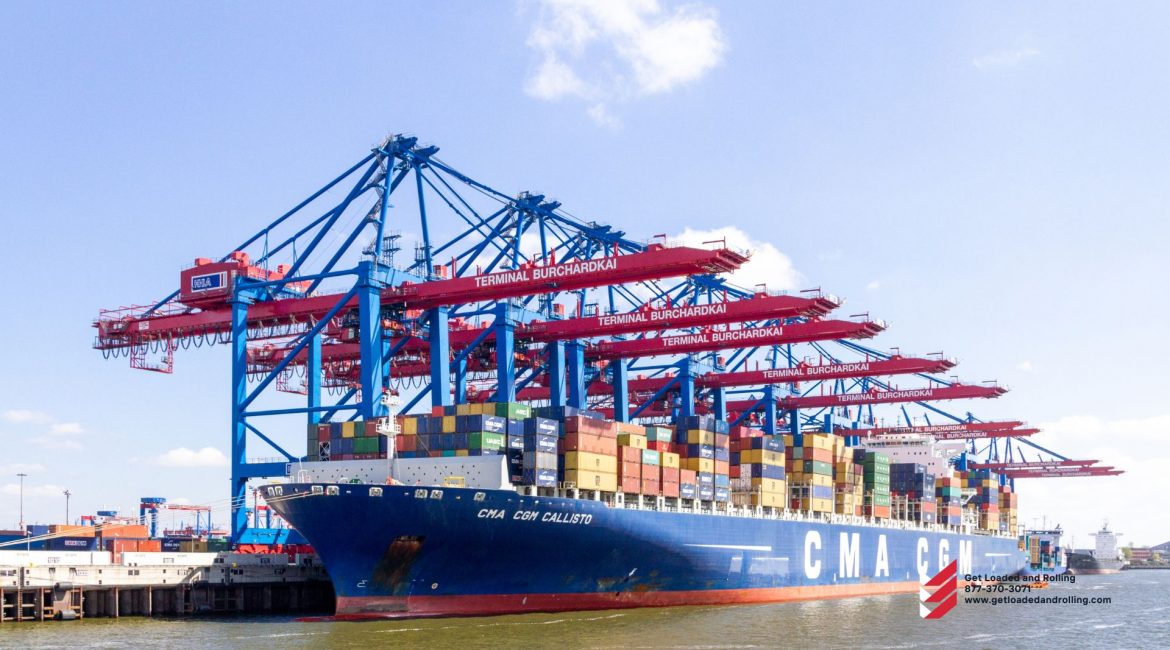
The companies that run West Coast port terminals and the union that represents dockworkers rejected requests to extend their contract, which was slated to expire at 5 p.m. PST on Friday, but they agreed to keep goods moving until an agreement is found.
“Both sides recognize the strategic importance of the ports to the local, regional, and national economies, and are cognizant of the need to finalize a new coast-wide contract as soon as possible to ensure continuing confidence in the West Coast” as a competitive trade route, the Pacific Maritime Association and the International Longshore and Warehouse Union (ILWU) said in a joint statement Friday afternoon.
Those familiar with the history of labor relations at the ports believe that the fact that the parties are communicating with a unified voice rather than publishing separate press statements in an attempt to attract public support is a good omen. The master contract includes 22,000 dockworkers at 29 West Coast ports, which account for around 44 percent of all container freight volume in the United States. The primary container gateways are in Los Angeles and Long Beach, California.
Earlier in the day, more than 150 industry groups encouraged the White House to press management and labor at West Coast ports to temporarily extend their contract in order to ensure supply chain continuity for firms, workers, and consumers as the economy faces rising headwinds.
The ILWU and West Coast employers began talks on a new five-year labor agreement in mid-May, against a backdrop of recovery from the supply chain disruptions caused by COVID, record cargo volumes, congested container terminals, inland distribution challenges, product shortages, and rising concerns about a potential recession.
“Extending the current contract would provide greater confidence to all supply chain stakeholders who rely on West Coast ports in the United States.” This is especially crucial given the continued supply chain interruptions and congestion for a variety of reasons,” the trade associations wrote in a letter to President Joe Biden.
The lack of a written contract allows for pressure tactics, although neither side is planning a strike or lockout.
On June 10, the leaders of the Pacific Maritime Association (PMA) and the International Longshore and Warehouse Union (ILWU) met with President Biden at the White House and pledged to reach a labor agreement without causing any cargo interruption. Many saw the statements as a promising omen after three of the last four contract talks resulted in disruptions, including work slowdowns. The economic impact of negotiations slowdowns in 2014-2015 took around eight months to recover.
However, concerns about transportation delays persist as container loads rise ahead of the annual busy season for Asian imports. As a precaution against probable labor-related delays along the West Coast, many merchants have already relocated cargo to ports on the East and Gulf coastlines. Several of these ports, particularly New York/New Jersey, are currently suffering increased congestion and vessel backlogs.
Meanwhile, according to Sea-Intelligence, a maritime data provider, timetable reliability for container lines between Asia and US West Coast ports has dropped to between 10% and 20%. Backlogs may also grow if Chinese exports rebound following the removal of lockdowns in Shanghai and other cities last month. Although some stores claim to have too much inventory, the overstock appears to be category-specific, with many products still in high demand, notably for the forthcoming Back-to-School season.
On Bloomberg TV, Los Angeles Port Director Gene Seroka predicted that the port would have its greatest June ever in terms of container throughput.
Because West Coast ports must use its members to handle maritime exports, the ILWU virtually enjoys monopoly power.
“As we reach the crucial peak shipping season, we predict cargo flows to stay at all-time highs, putting more strain on the supply chain and driving up inflation.” Many people believe that these difficulties will last the rest of the year. “Despite the recent joint declaration, supply chain stakeholders remain worried about the possibility for disruption, particularly in the absence of a contract or an extension,” the letter stated.
The National Retail Federation, the National Association of Manufacturers, and the Toy Association are among those who have signed on.
On Thursday, nearly two dozen Democratic lawmakers wrote to the PMA and ILWU to emphasize the necessity of working in good faith to finalize a new contract and ensure the ports continue to operate normally.
Both parties are under intense political pressure to achieve an agreement. Despite the fact that many ILWU members earn more than $100,000 per year, the union is presenting the negotiations as a battle between mainstream American workers and international shipping lines that are making record profits. At the same time, the pro-union Biden administration is struggling to keep record inflation under control, which is undermining the president’s approval ratings. A labor slowdown or strike will compound existing shipping delays, raising the pricing of numerous commodities in addition to transportation costs.
A former shipping line executive who has participated in prior ILWU negotiations but did not want to be recognized recently stated that the president’s guarantee greatly tilts the scales in favor of no work stoppage during contract talks.
Conflict over automation
The primary issue at hand is automation, as well as salary and benefits. When most ports have run out of physical capacity to develop, shipping lines and their linked terminals see automation as the only solution to handle compound yearly growth of 3% to 4%. The union is concerned about job losses, but many experts believe that as container volumes increase, more employees will be needed to manage and maintain the technology.
Almost all ports in Northern Europe, as well as several terminals in Asia, have automated truck gates and yards. The Los Angeles/Long Beach complex currently contains two semi-automated terminals, with a third under construction. In early May, research sponsored by the PMA from the University of California at Berkeley found that not only do automated terminals offer a 44 percent productivity advantage over nonautomated terminals, but they also recorded additional work hours for dockworkers.
According to research issued Thursday by the Economic Roundtable and supported by an ILWU grant, automation at the Long Beach Container Terminal and the TraPac terminal in Los Angeles has resulted in the loss of 572 full-time jobs and $41.8 million in annual pay for longshoremen.
The nonprofit urban research organization suggested that the cities of Long Beach and Los Angeles impose a displaced worker impact levy on any new automated equipment to mitigate public costs associated with employment loss due to automation. It also suggested that the state of California levy a fee on automated terminal equipment equal to the money generated by income and payroll taxes when containers are transported by dockworkers without the use of automated equipment. According to the report, the San Pedro Bay ports should not approve plans to automate terminals unless it can be proved that the automation will result in net advantages for California workers.
According to a shipping industry executive, the PMA will make a hefty one-time lump sum payment to dockworkers to purchase the right to automate in perpetuity.
