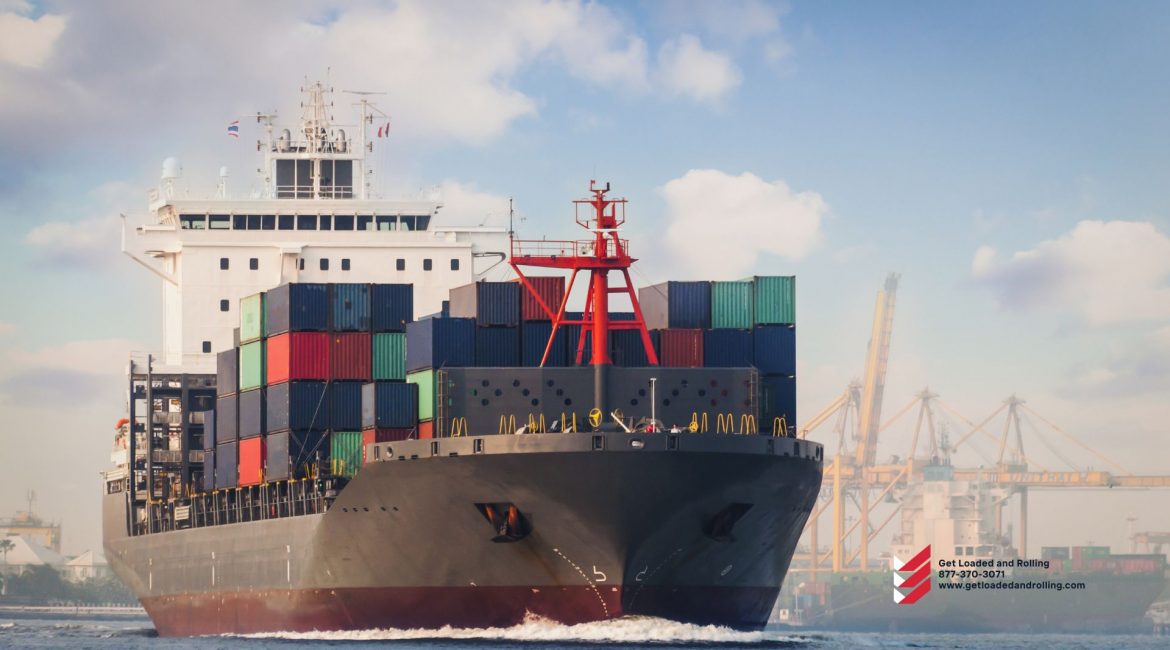
Anchorages continue to fill with container ships waiting off East and Gulf Coast ports, where vessel lineups have now exceeded those off the West Coast. The number of container ships waiting along all three coasts remains extremely high.
According to a study of ship-tracking data from MarineTraffic and California queue numbers, there were 125 container ships waiting off North American ports on Friday morning.
This is down from 150 waiting for ships in January, when West Coast congestion peaked, but up from 92 ships a month earlier.
The shipping queue off Los Angeles/Long Beach has received the most attention in the last year, but the congestion epicenter has shifted: as of Friday, only 36% of waiting ships were off West Coast ports, with 64% off East and Gulf Coast ports. Savannah, Georgia, now has the world’s longest ship wait.
A map depicting cargo ships awaiting berths in Savannah.
Container ship swarm off the coast of Savannah, Friday 8 a.m. MarineTraffic Map
On Friday, container ships sitting off the coasts of the United States and British Columbia had a combined capacity of 1,037,164 twenty-foot equivalent units.
What is the total cargo value of all those boxes? On a purely speculative basis, the estimated value of cargo waiting offshore on Friday exceeded $40 billion, assuming 90 percent utilization (some estimates are higher) and an average cargo value per import TEU of $43,899 (the average value of cargo imported by Los Angeles in 2020, likely conservative given inflation).
Volumes shift eastward.
Monthly arrival TEU capacity to West Coast versus East Coast ports is tracked by Project44.
It discovered that capacity to the East Coast in June was increased 83 percent year on year and 177 percent compared to June 2020. East Coast-bound capacity has now reached parity with West Coast-bound capacity, which has declined nearly 40% from its January peak. The shift was due to importer concerns over West Coast port labor disruptions, according to Project44.
Queues on the East/Gulf Coast
As of Friday morning, MarineTraffic data indicated 36 container ships waiting for berths in Savannah off the coast of Tybee Island, Georgia. The ship’s overall capacity was 343,085 TEUs (average ship size: 9,350 TEUs).
According to FreightWaves’ own SONAR index of bookings data, growth in inbound volumes to Savannah vs the index date (January 2019) is much higher than the national average.
According to a Hapag-Lloyd operating update this week, the waiting period for a berth in Savannah is now 10-12 days. Yard usage in Savannah was estimated to be 89 percent by the carrier.
The second-longest East Coast line lies off the coast of New York/New Jersey. On Friday morning, 20 vessels with a total capacity of 180,908 TEUs were waiting (average size: 9,045 TEUs).
According to Hapag-Lloyd, berth waiting times in New York/New Jersey are “running upwards of 20 days depending on the terminal.” Yard utilization at Maher was 92 percent, 75 percent at GCT Bayonne, and 72 percent at APM Terminals, according to Hapag-Lloyd.
On the Gulf Coast, 20 ships with a total capacity of 121,196 TEUs waited off the coast of Houston (average size: 6,060 TEUs). Hapag-Lloyd said that utilization at Houston’s Barbours Cut terminal was at 86 percent, and that “terminals continue to encounter chassis shortages due to prolonged street dwells.”
Two ships were awaiting orders off the shores of Virginia and New Orleans, respectively.
Queues on the West Coast
According to the Marine Exchange of Southern California’s 7 a.m. queue list on Friday, 24 container ships with a total capacity of 208,903 TEUs were waiting for berths in Los Angeles/Long Beach (average size: 8,704 TEUs).
This backlog has decreased significantly from a peak of 109 ships on January 9, yet it remains the second-largest ship queue in North America. The Los Angeles/Long Beach ship count has been stable since late May and is still slightly higher year on year.
Elsewhere on the West Coast, 10 ships were waiting for berths in Oakland as of Friday at 7 a.m., according to the Marine Exchange of the San Francisco Bay Region’s queueing list. The overall capacity of these ships was 79,712 TEUs (average size: 7,971 TEUs).
Finally, eight vessels were awaiting berths in Vancouver, British Columbia, with three more off the coast of Seattle/Tacoma.
