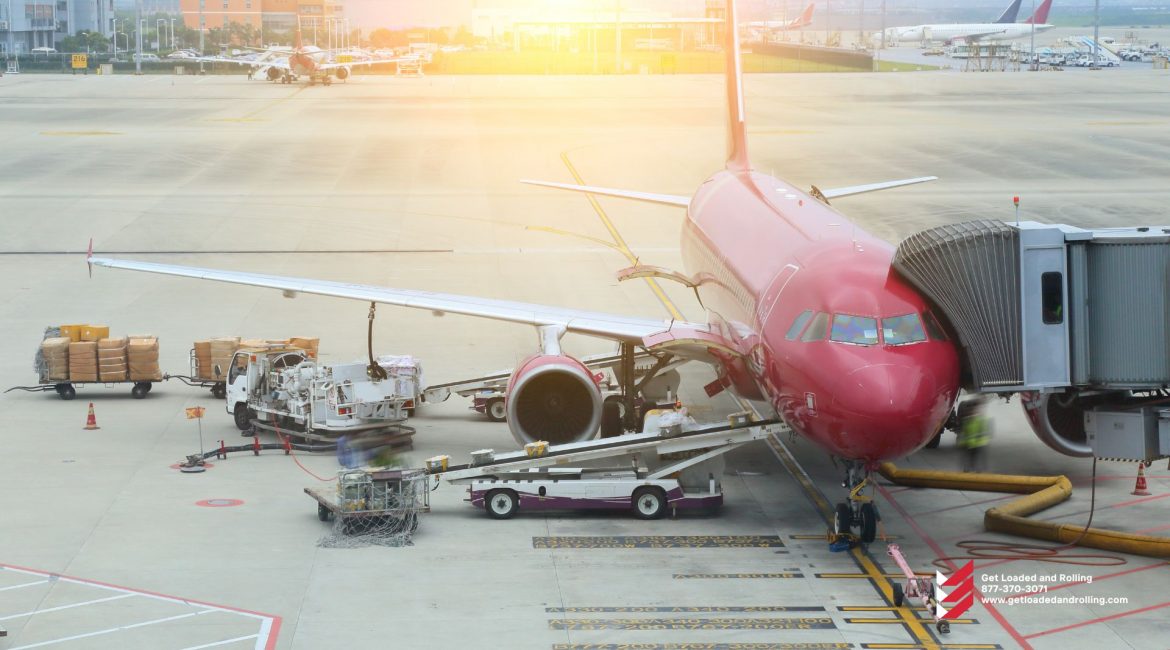
On Monday, January 3rd, the state of California asked a federal appeals court to rehear its lawsuit challenging a new air cargo facility at San Bernardino International Airport, which houses a major package hub in Amazon’s air network. According to Attorney General Rob Bonta, the original decision violates existing environmental law and exposes the local community to harmful diesel trucks and jet emissions.
Over the objections of California and community groups, the Federal Aviation Administration approved the $200 million Eastgate Air Cargo Logistics Center in 2019, and the project was allowed to proceed in the summer of 2020 by a divided panel of the United States Court of Appeals for the Ninth Circuit. According to the attorney general’s office, the FAA conducted a cursory environmental analysis and understated the impact of increased truck traffic on air pollution.
The cargo center features a 658,500-square-foot warehouse, as well as ground support buildings and parking for 14 all-cargo aircraft.
Amazon (NASDAQ: AMZN) took over the operation of the aircraft ramp and sortation center in April of last year. Outbound aircraft group and redistribute online shipments arriving by truck and air. State officials estimate that by the middle of the decade, dozens of additional flights and hundreds of truck trips will be generated each day, along with at least one ton of toxic air pollutants. According to the airport, Amazon currently operates nine flights per day.
San Bernardino is located about 60 miles east of Los Angeles on the Interstate 5 corridor, in the heart of the sprawling warehouse region known as the Inland Empire.
According to public health advocates and the state, particulate matter and harmful gases in industrial areas disproportionately affect low-income and minority communities.
The original lawsuit, filed by former Attorney General Xavier Becerra, now Health and Human Services Secretary in the Biden administration, sought to halt construction of the privately financed air cargo terminal until the FAA completed a comprehensive environmental impact statement that fully accounts for the harm to local communities.
“It makes no difference who you are or how much money you have. When the health and well-being of our communities are at stake, you can’t cut corners,” said Attorney General Bonta in a news release. “As People’s Attorney, I am committed to elevating the voices of communities living at the crossroads of poverty and pollution.” The fact is that communities like the one impacted by this project in San Bernardino are frequently overburdened and under-resourced. These communities, which are already suffering health consequences from pollution, deserve to be protected to the fullest extent of the law, and we’re committed to seeing this fight through our Bureau of Environmental Justice.”
According to the California Air Resources Board, San Bernardino residents are among the top 5% of Californians in terms of the prevalence of asthma-related hospital visits, and among the top 3% in terms of emergency room visits due to heart attacks.
Petitioners, including the attorney general and the environmental advocacy group Earth Justice, argue that the court’s decision should be reconsidered for a variety of reasons. It argued that imposing a new burden of proof on petitioners seeking to challenge FAA decisions under the National Environmental Policy Act (NEPA) is contrary to 9th Circuit precedent, which holds that the agency bears the burden of identifying and analyzing environmental impacts. The panel also allowed the FAA to approve the project based on a flawed environmental analysis with unknown consequences, in violation of the 9th Circuit and Supreme Court precedents. Finally, the petition asserts that the case is of exceptional importance due to the number of people affected and warrants the court’s attention, especially since the FAA’s lack of data transparency prevented the state and the public from documenting the Eastgate project’s negative impacts.
The panel that decided the case “erroneously allowed the FAA to base its approval of the project on the incomplete and inaccurate analysis in the environmental assessment,” according to the petition filed by the California Department of Justice.
If the court agrees to a rehearing, 11 judges will be chosen to participate. The initial panel consisted of three judges.
FedEx (NYSE: FDX) and UPS (NYSE: UPS) are also tenants at the airport in San Bernardino.
