Borderlands is a weekly update on what’s going on in the world of cross-border trucking and trade between the United States and Mexico. CBP terminates its lease with the Port of Brownsville this week; Mexico extends the deadline for new customs requirements; Mexico is the world’s seventh-largest agricultural product exporter; Holt Truck Centers expands into Oklahoma.
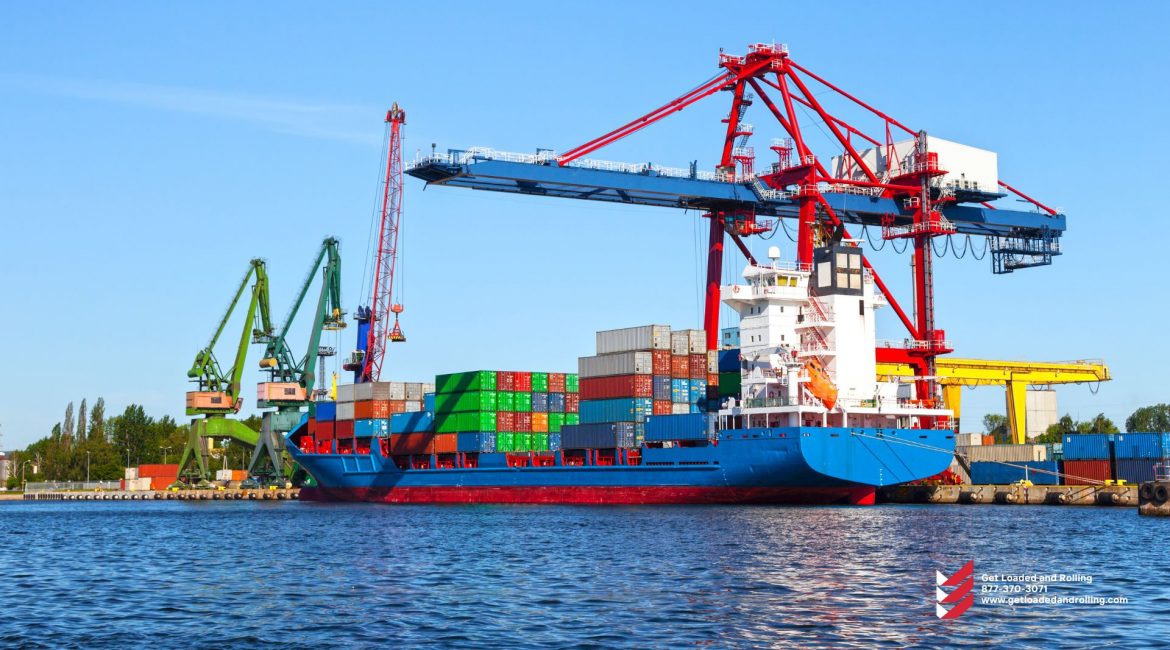
CBP terminates its lease with the Port of Brownsville and relocates operations to a nearby airport.
US Customs and Border Protection recently announced the termination of its lease with a south Texas seaport that serves as a major trade route between the US and Mexico.
CBP personnel and operations were transferred from the Port of Brownsville to the Brownsville-South Padre Island International Airport on Saturday.
All CBP customs services, including maritime, agriculture, foreign trade zones, bonded warehouse facilities, and in-bond movements, will be managed from the airport’s new offices.
CBP officials did not provide FreightWaves with a reason for the lease termination or an estimate of how many employees will relocate to the airport.
“Because the lease between CBP and the [Port of Brownsville] has expired, arrangements for CBP inspectional services must be made in advance by contacting CBP personnel by phone.” “The international trade community has been notified,” CBP officials wrote in an email to FreightWaves.
The Port of Brownsville, established in 1936, is a 40,000-acre deepwater seaport on the United States-Mexico border. A 17-mile-long ship channel connects the port to the Gulf of Mexico. Bulk carriers and oil/chemical tankers are among the commercial vessels that call on Brownsville on a regular basis. There are 13 general cargo docks and six liquid cargo docks at the port.

More than 80% of the port’s trade is with Mexico, with products such as steel, gasoline, and other fuels being transported across the border.
According to Eduardo Campirano, director and CEO of the Port of Brownsville, CBP’s relocation to the airport has no effect on trade activity.
“The only difference is that they will no longer have a presence inside the [Port of Brownsville],” Campirano explained. “CBP is relocating to Brownsville International Airport, where they recently built a new terminal; apparently, they have new space there.”
Brownsville-South Padre Island International Airport is located approximately 6.5 miles from the Port of Brownsville. The airport will open a $43.8 million terminal in 2020.
“We’re obviously disappointed in a port standpoint because we’ve been providing CBP with facilities in our port for 40 years,” Campirano said.
The Customs and Border Protection did not pay rent at the Port of Brownsville.
“They informed us that they would be going to the airport and dispatching the same people to come to the port,” Campirano said. “Clearing vessels here at the port continues to be a top priority for them.”
When contacted by FreightWaves, officials from the Brownsville Licensed US Customs Broker Association declined to comment on how the move might affect trade in the area.
In 2020, the Port of Brownsville moved a record 11.6 million short tons of cargo. The port is home to over 270 businesses employing over 4,000 people.
Every day, more than 1,000 trucks transport petroleum-based products, as well as sugar, salt, wind turbine components, and steel, through the port.
Mexican authorities have extended the deadline for the implementation of new customs requirements.
The Mexican government has announced that it will postpone the implementation of a contentious customs regulation known as the Carta Porte — a digital tax document issued to shipments that are intended to protect the transfer of legitimate goods across Mexico.
Companies shipping goods across the United States-Mexico border now have until March 31 to prepare for the Carte Porte or face fines or penalties. The new tax document requirements for companies shipping goods across Mexico went into effect on Saturday.
The Mexican Tax Authority (SAT) established the Carta Porte in order to reduce cargo theft and the movement of smuggled goods through Mexico.
All freight of any size and commodity traveling through Mexico by road, rail, air, or sea will be required to have the Carte Porte supplement, an electronic document with up to 160 questions.
The SAT now requires all entities sending goods through Mexico to include the Carta Porte supplement in their electronic invoices (known as CFDI in Spanish).
The SAT has the authority to fine shippers, carriers, and other parties up to $4,500 for failing to include proper documentation with a shipment.
Mexico is the world’s seventh-largest exporter of agricultural products.
According to Mexico’s Ministry of Agriculture and Rural Development, the country exported agricultural and beverage products to 192 countries in 2021, making it one of the world’s largest agricultural exporters (SADER).
Agricultural exports increased 7.5 percent year on year during the first 11 months of 2021, propelling Mexico to the seventh-largest international exporter, according to SADER.
“The numbers and records are important and motivate us to keep growing, but we never forget that behind the foreign trade figures are success stories of companies, producers, and people who are the face of the transformation of the Mexican countryside,” SADER’s director, Vctor Villalobos Arámbula, said in a statement.
Beer and tequila are the most popular products sold abroad. From January to November, Mexico exported more than 3 billion liters of beer to 130 countries. Mexican beer was primarily exported to the United States, Australia, Canada, and South Africa.
Tequila came in second, with Mexico exporting nearly 500 million liters of the distilled beverage in the first 11 months of the year, the highest level of export for the product ever. The most popular destinations are the United States, Australia, Canada, and South Africa.
According to SADER, other top exported agricultural products include pork, beef, avocados, animal feed, and lobsters.
Holt Truck Centers enters Oklahoma.
Holt Truck Centers recently acquired five Summit Truck Group dealerships in Oklahoma, as well as the Wichita Falls, Texas territory.
Oklahoma City, Tulsa, Ardmore, Enid, and Muskogee are among the cities included in the purchase. In addition, Holt will be Navistar’s authorized International truck and IC Bus dealer in Oklahoma and Wichita Falls.
The transaction’s financial terms were not disclosed.
“We have deep roots in the on-highway truck business and are committed to ensuring our customers continue to receive superior products and services to meet their diverse needs,” said Bert Fulgium, senior vice president of Holt Truck Centers.
According to a press release, Holt will continue to sell Isuzu commercial trucks as well as Ottawa and Crane Carrier specialty vehicles, as well as service all makes and models at all of its locations.
