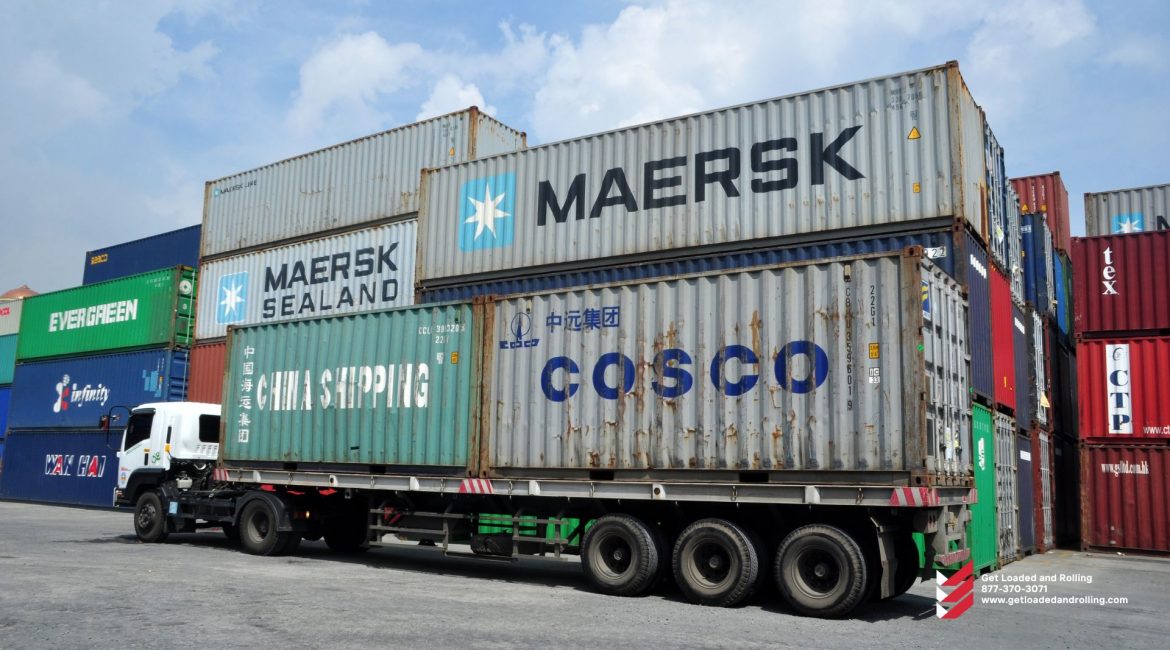
The ports of Los Angeles and Long Beach began charging diesel-powered drayage trucks $10 each unit entering and exiting the ports on Friday, with the money going to a Clean Truck Fund to help pay for zero-emission trucks and infrastructure.
The Clean Truck Rate is calculated on the basis of a 20-foot-equivalent unit hauled by a diesel truck. Moving a conventional 40-foot container would cost $20. Exemptions apply to electric trucks and certain alternative fuel vehicles.

The levy, which is applied to cargo operators and their agents rather than drivers, is expected to bring in $45 million for each of the two California ports this year.
‘Tough leadership moment,’ says one.
“This is a difficult time to be a leader. I know it’s difficult for our truck drivers. “I realize it’s difficult for our companies,” Los Angeles Mayor Eric Garcetti remarked at a press conference at the Port of Long Beach, with a backdrop of Toyota fuel cells and BYD electric trucks. “I understand how difficult it is for our ports to take a chance. But this is a risk that will pay off.”
In 2017, Garcetti and Long Beach Mayor Robert Garcia vowed to establish a new Clean Truck Program that will mandate all trucks entering and exiting ports to produce zero emissions by 2035.
“We have a lot of work to do to get there,” Garcetti added. “When we look at our infrastructure and vehicles, it’s going to cost billions of dollars.” However, this Clean Truck Rate is a necessary first step.”
It is a precursor to the state’s Advanced Clean Truck rule, which will require 5% of new tractors to have zero tailpipe emissions starting in 2024 and gradually increasing until 2040.
The California Air Resources Board is set to mandate electric trucks not only from manufacturers but also from fleets, this fall.
Achievements in Pollution Reduction
The two ports are raising funds through the fee to accelerate the shift, which has already resulted in substantial reductions in particle emissions (90 percent), sulfur oxides (97 percent), and nitrogen oxides (60 percent), according to Port of Long Beach Executive Director Mario Cordero.
“No other container gateway in the world has achieved the pollution reductions that we have at the San Pedro Bay complex,” stated Cordero. “It’s not about lowering pollution.” Today, our goal is to eliminate emissions.”
There are 16 demonstration projects.
According to Los Angeles port chief Gene Seroka, the ports already have 16 demonstration projects with over 200 different types of zero-emissions technology.
One of these is the $82 million Shore-to-Store program, which involves the utilization of 10 hydrogen-powered Kenworth T680 Class 8 trucks outfitted with Toyota-made hydrogen fuel cells within the ports and on runs to the Inland Empire. Two hydrogen filling stations and two terminal tractors are part of the project.
“We need original equipment manufacturers and their tiered suppliers to speed the development, deployment, and delivery of inexpensive zero-emissions equipment and heavy-duty vehicles not just in Southern California, but across the country and around the world,” Seroka said.
Moreover, a quarter of the 20,000 trucks in the ports’ registration predate the higher pollution standards that went into force in 2010.
“We need to shift those 5,300 trucks to something other than diesel in the short term,” Cordero added.
