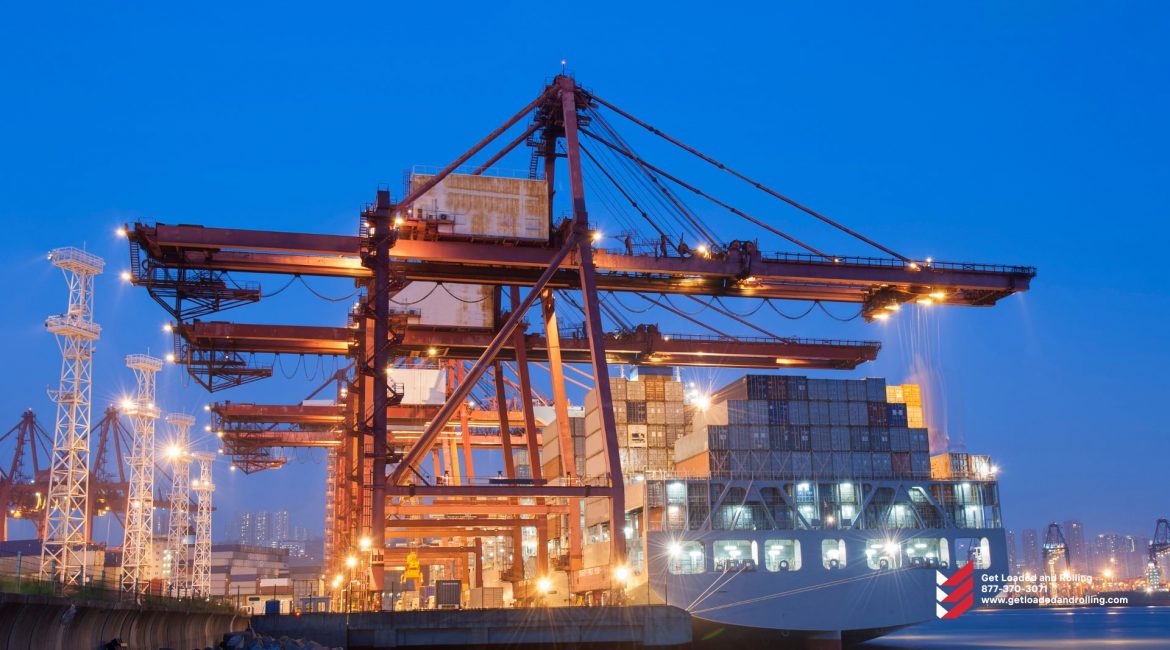
China is the world’s top containerized products exporter, produces eight out of every ten new containers, is the leading builder of container ships, and operates the world’s fourth-largest liner firm. It should come as no surprise that China dominates the worldwide container port rankings – and with maritime traffic on the upswing, its port tally has reached a new high.
Last week, Alphaliner announced its annual rankings of the world’s top 30 container ports by volume. Shanghai, Ningbo-Zhoushan, Shenzhen, Guangzhou-Nansha, Qingdao, Tianjin, and Hong Kong are among the top ten Asian cities, with seven of them located in China: Shanghai, Ningbo-Zhoushan, Shenzhen, Guangzhou-Nansha, Qingdao, Tianjin, and Hong Kong.
In 2021, the top 30 ports handled 450 million twenty-foot equivalent units, a 6.5 percent increase over the previous year. Growth was only 0.6 percent in 2020, the first year of the epidemic.
Asian mega ports, which have long outpaced their competitors, contributed for 77 percent of last year’s top-30 total, with China alone accounting for nearly half: 47 percent. Shanghai, the long-reigning champion, “continued to increase its lead” and “has now opened up a gap of roughly 10 million TEUs on its nearest challenger, Singapore,” according to Alphaliner.
Ports in Europe, which handle 12% of the top 30 ports’ volumes, are far behind, as are ports in the United States, which handle 8%, and the Middle East, which handle 3%. The United States is represented by three ports on the list: Los Angeles/Long Beach at No. 10, New York/New Jersey at No. 18, and Savannah, Georgia, at No. 28.

When the most recent rankings are compared to those from a half-decade ago, it is clear how the world’s largest ports have maintained their dominance over time.
Despite trade war, lockdowns, and port closures, Asia accounted for 78 percent of volumes at the top 30 ports five years ago, with China accounting for 49 percent – virtually the same market shares they had last year.
The top 30 ports handled 377.8 million TEUs in 2016, representing a 19% increase from 2016 to 2021. That equates to a compound growth rate of 3.6 percent, which is consistent with normal yearly growth in worldwide port throughput and is predicted in 2022. (Maersk predicts 2 percent -4 percent ).
Unusually high growth in 2021 pushed the top 30 ports back up to the normal trend line. According to Drewry, throughput climbed by 6.5 percent last year across all ports globally. That is the same level of growth reported by Alphaliner for the top 30 ports, and it is 2% to 3% greater than usual.

Some gateways performed better than others last year, with some significant winners among the world’s top ports. According to Alphaliner, throughput increased by 3.5 million TEUs or 8% in Shanghai; 2.7 million TEUs (16%) in Los Angeles/Long Beach; 2.3 million TEUs (8%) in Ningbo-Zhoushan; 2.2 million TEUs (8%) in Shenzhen; and 1.9 million TEUs (8%) in Tianjin (10 percent ).
